PORTLAND, OREGON – A rescued Siamese cat named Luna has developed an unusual nighttime behaviour that leaves her foster caretaker struggling to understand what happened before she was rescued.
Throughout the day, Luna behaves like an ordinary affectionate house cat.
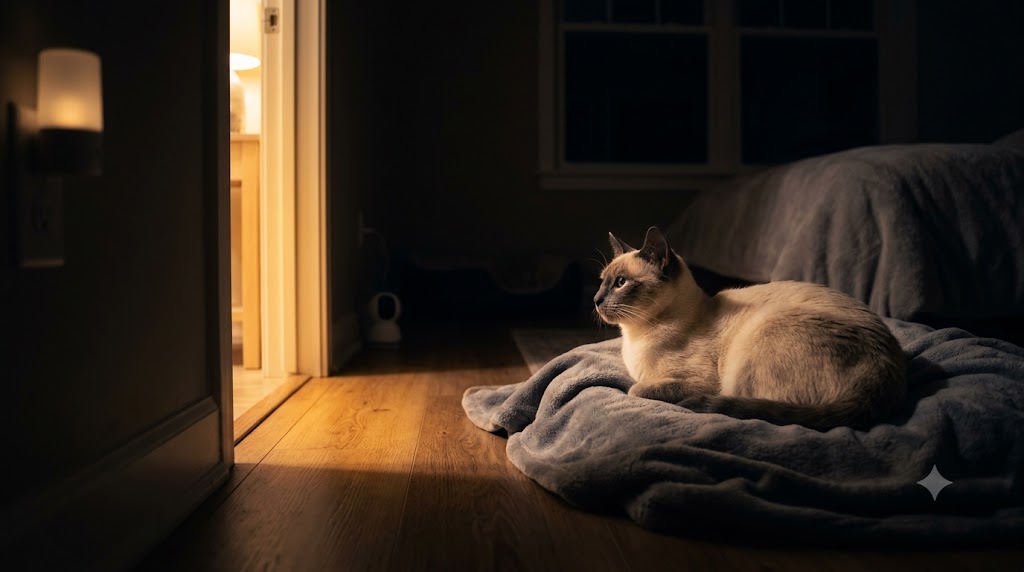
She sleeps on her soft bed, watches birds through the window, and occasionally follows her foster caretaker around the room.
But every night, when the lights go out, her behaviour changes dramatically.
The three-year-old Siamese immediately gets up from her bed.
She begins pacing along the walls, repeatedly looking toward the doorway.
Within minutes, she starts meowing.
Then she approaches the closed door and scratches frantically at the bottom, sometimes continuing until the lights are switched back on.
The moment even a small amount of light enters the room, Luna begins to calm down.
Her foster caretaker, 32-year-old Emily Carter, first noticed the behaviour during Luna’s third night in her home.
At approximately 10:30 p.m., Emily turned off the foster-room light and went upstairs.
Less than two minutes later, she heard repeated meowing.
When she returned, Luna was standing beside the door, scratching at the wood.
Emily switched on the overhead light.
Luna stopped.
She walked back toward her bed and curled up.
Assuming the cat was simply adjusting to a new environment, Emily tried the following evening again.
The same thing happened.
Over the next week, Luna’s nighttime distress became increasingly predictable.
She could sleep peacefully in a softly lit room.
She could tolerate dim light from the hallway.
But complete darkness consistently triggered pacing, vocalising, and scratching.
Emily installed a small indoor camera to better understand the pattern.
The footage showed Luna waking within seconds of the room becoming dark.
She would move along the walls, approach the doorway, and repeatedly scratch at the bottom of the door.
Sometimes she paused to listen.
Other times, she returned to her bed briefly before getting up again.
The episodes often continued until Emily reopened the door or restored the light.
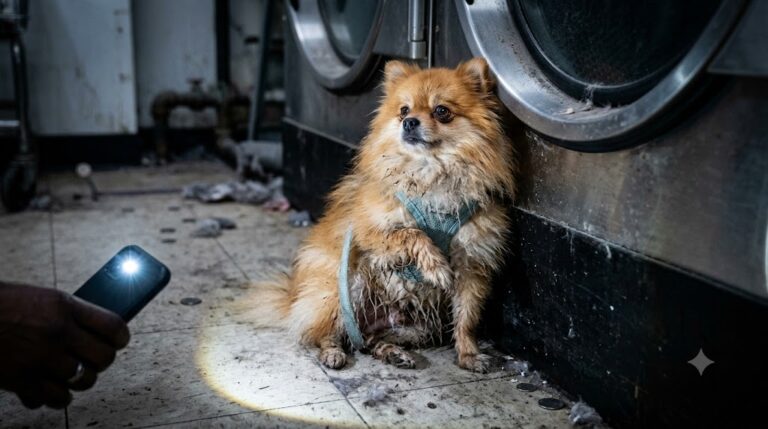
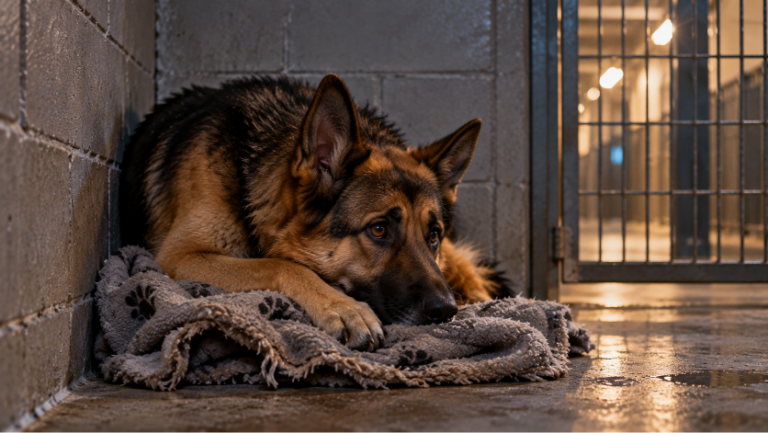
Luna had arrived in foster care three weeks earlier after being rescued from a vacant basement apartment.
Animal welfare officers had discovered her beneath an old wooden cabinet following complaints about repeated meowing from the property.
At the time, Luna was thin and dehydrated.
Her cream-colored coat was dusty, with tangled fur around her legs and dirt beneath her paws.
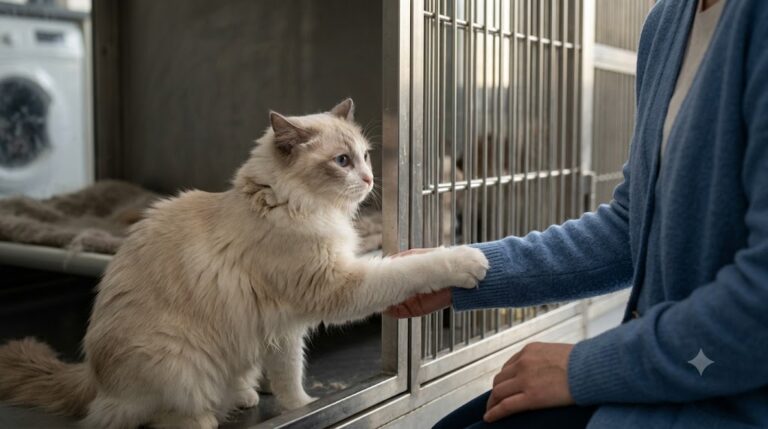
Veterinary staff provided fluids, nutritional support, and treatment for minor skin irritation.
After several weeks of care, her coat had become clean and healthy, and her appetite had improved significantly.
But the nighttime behaviour remained.
Emily contacted the rescue organisation to ask whether anything unusual had been documented during Luna’s recovery.
A volunteer reviewed the original intake report.
One detail stood out.